Wide Plains
The DispossessedWide Plains is an Anarresti community associated with Shevek’s childhood in the dormitories, his long separations from his parents, and his first shared explorations of mathematics with Palat. In its modest rooms and streets, communal arrangements meet private grief and affection; the place becomes an early setting for the patience and intellectual curiosity that accompany Shevek through the novel.
Setting and Communal Life
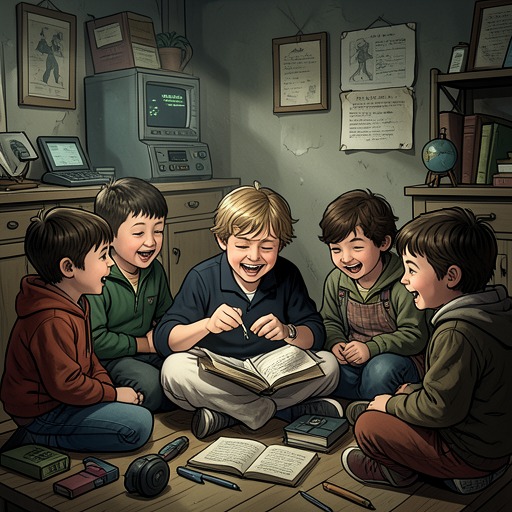
Wide Plains is presented through its children’s dormitories and the domicile where Palat visits Shevek. The dormitory room holds eleven babies, most sleeping in padded pen-cots, while the two eldest are free to move about. Its ordinary institutional life is organized around shared care: a one-eyed matron watches over the children and speaks sympathetically to Palat as he prepares to take his son on a dorm visit.
The setting belongs to a wider pattern of Anarresti community life rather than a private household. Children sleep in a large room, adults’ visits are constrained by work postings and distance, and the vigilkeeper enforces the dormitory’s routine. Yet the shared environment does not erase individual feeling: the room’s sunlight, the children’s play, and the leave-taking at night give Shevek’s separation from his mother a sharply personal form.
Shevek’s Childhood and Separation
When Shevek is very young, Rulag is posted to Abbenay and wants him to remain at the dormitory. As she is due to leave that night, Palat takes the crying child for a dorm visit. Shevek clutches his father’s neck and hides his face, refusing the matron’s cheerful promise that they will play truck-and-driver the next day. His distress makes the departure more than a routine change of caregivers: the child experiences it as the loss of a familiar source of warmth and light.
The dormitory also becomes the place where Shevek learns to wait. He later understands that he first acquired this skill while waiting for Rulag to return, though the experience is too early for him to remember. At eight, he asks questions about causes and possibilities, but seldom asks when; waiting has become a practiced part of his childhood, shaped both by separation and by the rhythms of communal life.
Palat’s Visits and Intellectual Discovery
Palat’s visits are infrequent. After a short maintenance posting at the Water Reclamation Plant in Drum Mountain and time at the beach in Malennin, he comes to the children’s dormitories in Wide Plains after six decads. Shevek trusts his father, and the two take pleasure in one another’s company. The contrast between their affection and the long interval between visits gives their meeting a quiet weight.
During one visit, Palat brings a small green-covered book of logarithmic tables, stamped with the Circle of Life. The numbers answer Shevek’s wish for a book that might reveal an underlying order: he has been imagining that numerical patterns could show how things fit together more fairly and truly than words. Palat explains logarithms and demonstrates his slide rule; Shevek, in turn, shows him the Square and its arrangement. Their exchange joins a child’s private fascination with numbers to a practical lesson offered by his father.
They lose track of the hour in the poorly lit common room, where old men play Top ’Em and an adolescent couple asks for a room. When rain on the metal roof stops, Palat and Shevek run through the muddy darkness back to the dormitory and receive a perfunctory scolding from the vigilkeeper. They kiss quickly, laughing, before Shevek watches his father walk down Wide Plains’ single street in the wet electric dark. The scene makes learning, affection, and the constraints of communal routine part of one remembered evening.
Memory and Narrative Significance
That night Shevek dreams of a road across bare land ending at a wall that stretches from horizon to horizon. The wall blocks the way home, and the dream turns the novel’s recurring boundary image into a child’s fear of separation and impossibility. Wide Plains is not identified as the dream’s landscape; rather, the dream follows a visit there in which Shevek has just experienced the pleasure of closeness and the return of distance.
The place’s significance lies in this conjunction of everyday institutions and formative feeling. The dormitory is at once a shared home for children and the setting of Shevek’s early losses; Palat’s visits bring intimacy into that communal order, while their departures renew the experience of waiting. Wide Plains thus supplies an early, concrete ground for the novel’s continuing concern with how people live together without possessing one another, and how bonds endure across separation.